
The Connection Between Flexibility Training and Better Posture

Good posture is often treated as a matter of discipline: sit up straighter, pull your shoulders back, stop slouching. But posture is not simply a position you force your body into. It is a reflection of how your muscles, joints, and nervous system work together throughout the day. When the body is stiff in key areas, even the best intentions can collapse into rounded shoulders, a forward head position, or an overarched lower back. That is why flexibility training matters. It does not just make movement look better; it can make good posture feel more natural and sustainable.

In practice, posture improves when the body can move through healthy ranges without strain. Tight hips can tug the pelvis out of balance. A rigid chest can encourage slumping. Restricted shoulders can make it difficult to stack the upper body well over the spine. By improving mobility in the places that commonly become stiff, flexibility training helps the body find a more efficient resting alignment, not by force, but by removing some of the barriers that make upright posture harder to maintain.
Why posture depends on movement, not willpower alone
Posture is dynamic. Even when you appear still, your body is constantly making small adjustments to keep you balanced. If one region is limited, another region often compensates. This is why someone with tight hip flexors may stand with an exaggerated lower-back curve, or why someone with a stiff upper back may push the head forward to see straight ahead.
Trying to correct posture without addressing those restrictions can feel exhausting. You may be able to “sit properly” for a few minutes, but the body tends to return to the path of least resistance. Flexibility work helps change that equation. When tissues are less guarded and joints can move more freely, a more neutral posture requires less effort.
It is also important to remember that flexibility is not about becoming extremely bendy. For posture, the goal is functional range of motion: enough freedom in the ankles, hips, thoracic spine, chest, and shoulders to allow the skeleton to align more comfortably over the base of support.
How flexibility training supports better posture
At its best, flexibility training improves posture in several connected ways. It can reduce chronic muscle tightness, restore movement options, and make balanced alignment easier to access during daily activities such as sitting, walking, lifting, and reaching.
It reduces unnecessary tension. Muscles that are habitually tight can pull the body away from neutral alignment.
It improves joint mobility. When joints move more freely, nearby areas do not need to overcompensate.
It supports better body awareness. Slow stretching and mindful movement help people notice how they stand, sit, and carry tension.
It works well with strength. Posture is strongest when mobility and stability develop together.
This is one reason practices such as yoga can be helpful when they are taught with attention to alignment and individual needs. For readers exploring guided flexibility training, YOGA FOR POSTURE offers a context where posture, movement quality, and sustainable body mechanics are treated as connected rather than separate goals.
Common Areas of Tightness That Influence Posture

Not every posture issue comes from the same place. However, several areas commonly become tight in people who spend long hours sitting, working at a desk, driving or looking down at screens. Understanding these patterns can make flexibility and mobility work more targeted and effective.
Area | What tightness may contribute to | Helpful focus |
Chest and front of the shoulders | Rounded shoulders and a collapsed upper body | Chest-opening stretches and shoulder mobility |
Thoracic spine | Difficulty extending through the upper back | Gentle rotation and extension exercises |
Hip flexors | Anterior pelvic tilt and lower-back compression | Lunges, hip-extension stretches and glute activation |
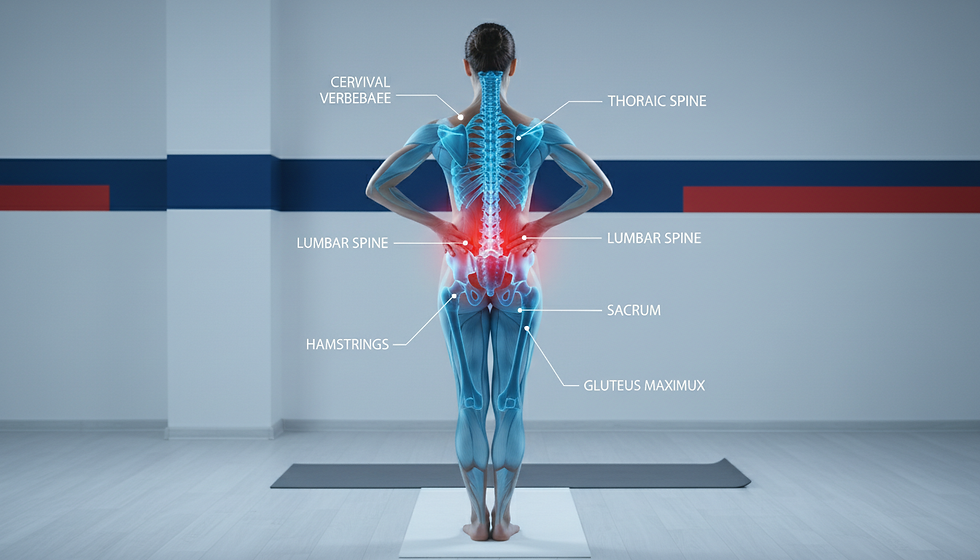
Hamstrings | Restricted hip movement and compensatory rounding of the spine | Gradual posterior-chain mobility |
Calves and ankles | Poor balance and altered standing mechanics | Ankle mobility and calf stretches |
The key point is that posture rarely improves by stretching one area in isolation. For example, opening the chest while ignoring the thoracic spine, shoulders and rib cage may produce only limited change.
Similarly, aggressively stretching the hamstrings without considering pelvic position and hip control may miss the source of the problem. Effective flexibility training should coordinate several areas of the body while also developing strength, stability and movement awareness.
How to build a flexibility routine that actually helps posture
A posture-supportive routine does not need to be long, but it does need to be consistent and intelligently chosen. For many people, ten to fifteen minutes most days will do more than a long session once a week.
Start with awareness. Notice where you feel most restricted during daily tasks. Is it hard to reach overhead without arching the back? Do your shoulders roll forward by afternoon? Does standing for long periods strain the lower back?
Warm up before deeper stretching. Gentle movement prepares tissues better than forcing range while cold.
Prioritise the major posture-related areas. Focus on the chest, upper back, shoulders, hips, and ankles before adding less relevant stretches.
Pair mobility with strength. After opening an area, teach the body to control that new range through simple strengthening or stabilising work.
Use breath to reduce bracing. Slow exhalations can help release unnecessary tension, especially through the rib cage, neck, and hips.
A simple weekly checklist can keep the practice realistic:
Mobility work for the upper back and shoulders
Hip flexor and hamstring stretching
Gentle spinal rotation and extension
Core and glute activation
Regular posture resets during the workday
People who prefer structure often benefit from working with an experienced teacher, especially when stiffness is accompanied by pain, previous injuries or long-standing movement habits. With professional guidance, flexibility training becomes more precise and purposeful rather than simply passive stretching.
For personalised support, you can book a private session with me online or at my studio. You can also join my Yoga for Posture group classes at:
66 David Fleay Street, Wright, ACT
Latin American Cultural Centre, 28 Astrolabe Street, Red Hill, ACT
What to expect and when to seek more support
Posture changes usually happen gradually. You may first notice that sitting upright feels less tiring, your shoulders settle more naturally, or your neck and lower back feel less loaded by the end of the day. Over time, better movement options can influence how you walk, work, exercise, and recover.
It is worth being realistic, though. Flexibility alone is not a cure-all. Habitual posture is shaped by work setup, stress levels, strength, fatigue, injury history, and how often you move throughout the day. Stretching cannot compensate for hours of stillness without breaks, nor should persistent pain be dismissed as simple tightness.
If posture issues are accompanied by numbness, recurring headaches, significant pain, or loss of function, professional assessment is important. For those mainly dealing with stiffness, mild discomfort, and the feeling that the body has become compressed by modern routines, consistent mobility work can be a meaningful starting point.
Ultimately, the connection between flexibility training and better posture is practical rather than cosmetic. A body that moves more freely can organise itself more efficiently. Instead of constantly fighting your posture, you create the conditions for better alignment to emerge with less effort. That is the real value of flexibility training: not performing perfect shapes, but helping the body stand, sit, and move with greater ease, support, and balance over time.
To learn more, visit us on: https://www.yogaforposture.com.au


Comments